Bonrcea Trailer Jack Block for Any Jack Type
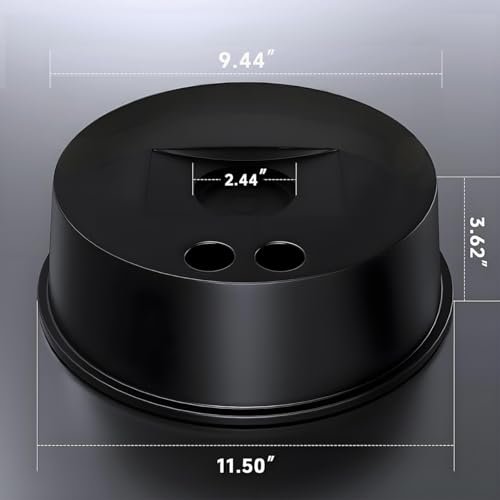
The Bonrcea Trailer Jack Block is an 11.5 x 11.5-inch solid base designed to go under tongue jacks, stabilizer jacks, 5th-wheel posts, scissor jacks, and round or square jack feet — on grass, gravel, dirt, or any surface where a bare jack pad sinks or shifts. It ships as a single block, weighs 3 pounds, and is built in black for RV, travel trailer, and fifth-wheel owners who want a reliable pad without hauling scrap lumber to the campsite.

The Bonrcea Jack Block — What's in the Box
Trailer Jack Block (Single)
See on AmazonSee more products
Discover the full product lineup with current selection on Amazon.
All products on AmazonKey Specifications
All specifications are for the single-block unit (ASIN B0F1CWX96W). If you need coverage for multiple jack points, order accordingly — the block ships as one unit.
| Dimensions | 11.5 × 11.5 × 3.6 inches |
|---|---|
| Weight | 3 pounds |
| Color | Black |
| Compatible jack types | Tongue jacks, stabilizer jacks, 5th-wheel posts, scissor jacks — round or square feet |
| Unit count | 1 block per order |
| Warranty | 3-year manufacturer warranty |
| Brand | Bonrcea |
| ASIN | B0F1CWX96W |
Best suited for RV owners, travel trailer haulers, and fifth-wheel setups who need a stable, multi-use base pad that handles any jack-foot profile on surfaces where bare feet would sink or shift.
What to Consider Before Buying a Jack Block
The single most important spec on any jack block is surface area. Smaller pads concentrate the load of a tongue jack or stabilizer into a tight contact patch, which means they sink faster on soft ground than a wider base. At 11.5 x 11.5 inches, the Bonrcea block gives you 132 square inches of contact — enough to distribute the load across grass, gravel, or compacted dirt without the corner-sinking you get from smaller aftermarket pads.
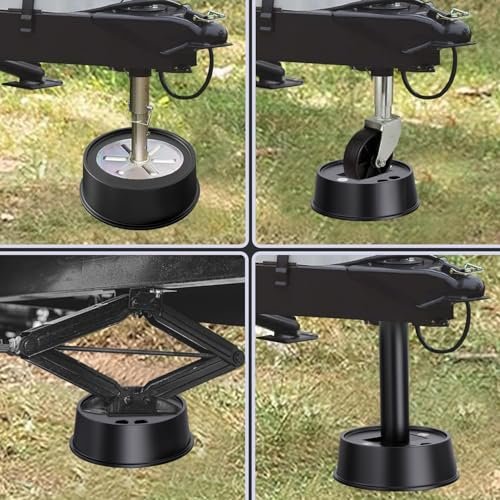
The second question is jack-foot compatibility. Most blocks are designed for either round feet or square feet, not both. The Bonrcea block accommodates both profiles — round tongue jack feet, square stabilizer jack feet, and 5th-wheel post configurations — so one block covers the full range of jack types on a mixed rig. That matters if you run a travel trailer with a tongue jack up front and scissor stabilizers at the corners, or if you're buying a block that will rotate between rigs.
Finally, consider the materials and what they'll actually encounter. Campground surfaces mean UV exposure, occasional oil or hydraulic fluid drips, mud, and freeze-thaw cycling. Cheap blocks crack or deform under repeated load on cold mornings. The block's construction addresses that directly: it's built to resist the grime, UV, and temperature swings that degrade lower-quality alternatives over a season or two.
Real-World Scenarios Where This Block Earns Its Place
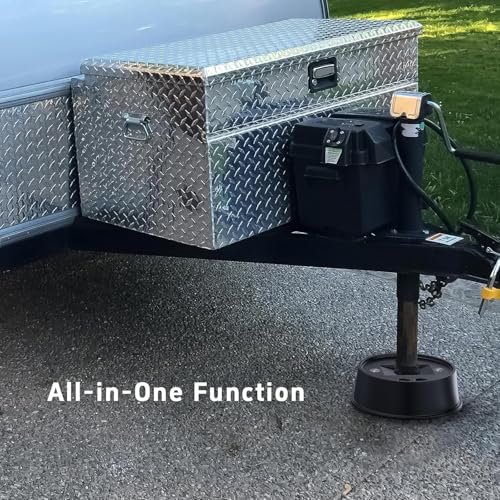
Grass and turf campsites: This is the most common failure point for bare jack feet. A 3,500-lb tongue weight sitting on a 3-inch jack foot pad will punch straight into wet or soft grass overnight, leaving you with a nose-down trailer by morning. The Bonrcea block spreads that same load across 132 square inches — the jack foot sits on top, and the block distributes the pressure across the turf rather than into it.
Gravel and rocky pads: Gravel shifts under point loads, which causes leveling to drift and stabilizer jacks to work loose. A flat, solid base under each jack foot locks the contact point and prevents the gradual migration that creates rattle and instability inside the rig.
Mixed-rig households: If you pull more than one trailer — a travel trailer and a utility trailer, or you occasionally move a 5th wheel — a block that only fits one jack-foot style is a limitation. Because the Bonrcea block accommodates round feet, square feet, scissor jacks, and post-style 5th-wheel jacks, it covers the full range without needing a separate pad for each rig.
What it's not for: A single jack block is not a substitute for a full leveling system on steeply uneven terrain. On a significant side-to-side or front-to-back slope, you need wheel chocks, leveling ramps, and potentially stacked blocking — a 3.6-inch-tall pad adds height under a single jack foot but doesn't replace the geometry work of getting a trailer level. On hard, flat, dry pavement, a jack block is largely unnecessary — be honest about that.
Care, Storage, and Getting the Most Out of It
The block is 3 pounds and 3.6 inches tall, which means it stores flat in almost any exterior compartment or truck bed toolbox without taking up meaningful space. The standard approach is to keep one per jack point — two blocks for a typical travel trailer running a tongue jack plus two corner stabilizers covers the full footprint. Stacking the blocks for extra height under a tongue jack on extremely uneven terrain is a common field technique; the flat surface allows stable stacking.
After use on muddy or oily surfaces, rinse the block and let it dry before stowing. The construction resists oil and grime, but debris packed into the storage compartment tends to migrate to places you don't want it. A quick rinse takes ten seconds and keeps the block clean for the next trip. UV exposure over multiple seasons won't degrade the block the way it would a cheaper plastic alternative, but storing it out of direct sun when the rig is parked long-term extends the surface quality.
The manufacturer backs the block with a 3-year warranty — a reasonable window for a product used in outdoor towing and camping conditions. Keep the purchase record accessible if a defect shows up in the first few seasons.
Frequently Asked Questions
Does this block actually fit both round and square jack feet?
Yes. The flat 11.5 x 11.5-inch surface accommodates both round and square jack-foot profiles — tongue jacks, stabilizer jacks, 5th-wheel posts, and scissor jacks all sit on the same block. You don't need separate pads for different jack types on the same rig.
Do I need more than one block?
The product ships as a single block. Most travel trailers run one tongue jack plus two or four corner stabilizers, so buying multiple blocks — one per jack contact point — is the standard approach. How many you need depends on how many jack feet you want supported, not the product itself.
Can I stack these for extra height on uneven terrain?
Yes. The flat top and bottom surfaces allow stable stacking when you need additional height under a tongue jack on uneven ground. That said, stacking blocks adds height under a single point — it doesn't replace proper leveling on a significant slope. Use wheel chocks and leveling ramps for major grade correction; the block handles the soft-ground and height-adjustment role.
Will this hold up to outdoor storage and UV exposure over multiple seasons?
The block is built to resist UV degradation, oil, and grime — the conditions that degrade cheaper alternatives inside a season or two. For long-term storage, keeping it out of constant direct sun extends the surface quality, but the construction handles the regular exposure that comes with active camping use. The 3-year manufacturer warranty covers defects within that window.
Is this necessary on paved campground pads?
On hard, dry, level pavement, a jack block is largely unnecessary — a bare jack foot won't sink into concrete or asphalt. The block earns its place on grass, gravel, dirt, or any surface where load concentration causes the jack foot to sink or shift overnight. If you camp exclusively on paved sites, this is a low-priority purchase. If your sites vary, it's worth keeping in the compartment.