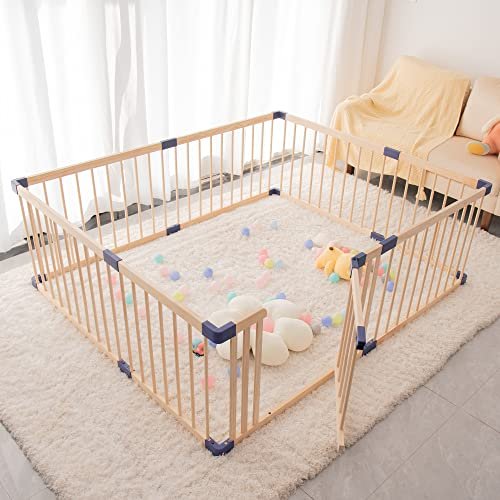
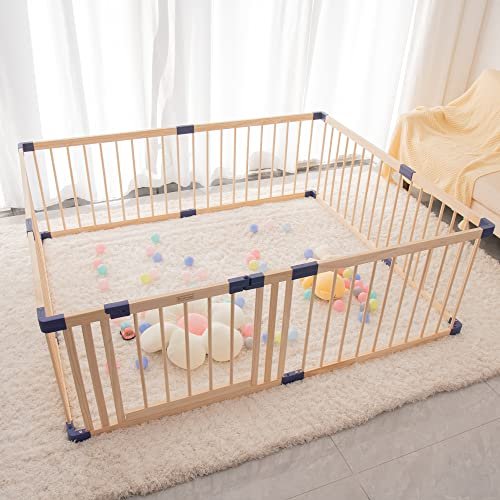
Every Bonrcea wooden playpen has passed third-party testing under the Consumer Product Safety Improvement Act — verifiable federal certification, not a self-applied label.
New Zealand pine, full aluminum, carbon steel, hardened steel lock pins — every material in the Bonrcea lineup is named specifically so you can check it before you buy.
The American Flag Cover + Lock bundle holds a #6 ranking in Amazon's Towing Hitch Covers category, earned across more than 2,100 verified reviews at 4.4 stars.
Hitch covers carry a 2-year manufacturer warranty; the plastic plug insert and trailer jack block both come with a 3-year warranty — written into the product listing, not buried in fine print.
Bonrcea's catalog splits cleanly into two worlds: nursery and home products for parents setting up a safe space for a baby, and truck and trailer accessories for anyone who tows or camps. The baby playpen and nursery glider chair share the same audience; the hitch cover and trailer jack block share the same truck — pick the category that matches your current project.
Bonrcea's American flag hitch covers fit most Class III and IV receivers with a 2-inch opening and come in three builds — carbon steel with lock pin, solid aluminum, and lightweight plastic — each with a different weight, warranty, and installation profile. Here's how to pick the one that matches how your truck actually lives. ``` ```
Ten wooden playpen configurations in New Zealand pine, CPC certified, with bar spacing at 2.8 inches and a push-button locking gate — sizes from 47×63 inches up to 71×79 inches.
Bonrcea's trailer jack block handles tongue jacks, stabilizer jacks, 5th-wheel posts, and scissor jacks on any surface where a bare jack foot would sink or shift. Here's what the specs mean in the field and when you actually need one. ``` ```
The RC03 glider ships with both a lumbar pillow and an ottoman, assembles in about 20 minutes, and is tested to 250 lbs — designed to pull duty in a nursery or a living room.
Browse the complete brand catalog with up-to-date pricing on Amazon.
These are the products with the highest review counts and the most consistent buyer feedback across both sides of the catalog — the hitch cover bundle that lands at #6 in its Amazon category, the playpens parents confirm genuinely smell and feel like unfinished natural pine, and the jack block that handles soft ground where trailer jacks would otherwise sink. They span all four product lines.
Ten wooden playpen configurations, all built from New Zealand pine that's hand-sanded and uncoated — no chemical finish on the surface a baby will grip and lean against. Every model is CPC and CPSIA certified, stands 24 inches tall, and uses 2.8-inch bar spacing that prevents fingers and toes from getting trapped. Sizes run from a compact 47×63-inch footprint (19 lbs) up to the largest 71×79-inch configuration (25 lbs), with a push-button locking gate across the entire line. One model (B0DCG1DW9S) folds flat for storage or travel; the rest are fixed-panel designs.
The Bonrcea playpen line spans seven size configurations, from a compact 47×63 inches up to 71×79 inches — and the same 8-panel system can be shaped into a square, a rectangle, or an L, so the footprint adapts to your room rather than the other way around. Here's how to match panel count and dimensions to your space and your baby's developmental stage.
| Configuration (L × W × H) | Approx. Square Footage | Best For | Notes |
|---|---|---|---|
| 47×63×24 in | ~20 sq ft | Apartments, small nurseries, single crawlers | Lightest option at 19 lbs — easiest to move between rooms |
| 55×79×24 in | ~30 sq ft | Medium rooms, babies learning to stand | 22 lbs; wide rectangular shape fits along most walls |
| 59×71×24 in | ~29 sq ft | Living rooms with furniture to work around | Standard 8-panel rectangular config; one of the most commonly purchased sizes |
| 59×79×24 in | ~32 sq ft | Active crawlers, small walkers, or two babies | 24.6 lbs; good balance of footprint and maneuverability |
| 63×71×24 in | ~31 sq ft | Open-plan spaces, babies who pull to stand | Available in foldable model (B0DCG1DW9S) for households that need to store it between uses |
| 71×79×24 in | ~39 sq ft | Large living rooms, 1–2 toddlers, longer use window | Largest available configuration; 25 lbs; can be stained with non-toxic stain since pine is unfinished |
All Bonrcea playpens with 8 panels can be reconfigured into three shapes without buying additional hardware. Square works best in the center of a room; rectangular configurations fit against walls or in corners more naturally; the L-shape is useful when you need to work around furniture or fit the pen into an irregular space. The push-button panel connectors make reconfiguring straightforward once you've done it once — the first time takes longer because the mechanism is unfamiliar, not because it's technically difficult.
If you want to start small and expand later, additional panels can be purchased separately. The system is modular by design.
From about 6 months through roughly 12 months — the crawling and pulling-to-stand stage — almost any size works. The baby isn't covering much ground, and the 24-inch height is genuinely effective at keeping them inside. A smaller configuration like 47×63 inches is enough for this phase and takes up less of your living room.
Once your baby is walking steadily, usually around 12–18 months, the space matters more. A walking toddler covers the perimeter of a 47×63-inch pen in seconds and will start treating the bars as a climbing structure out of boredom. If you're buying for the 12–36-month window and want the playpen to stay useful, the 59×79 or 63×71 configurations give meaningfully more room to move.
Here's the honest limitation: the 24-inch wall height that keeps a young crawler safely inside becomes less effective as a deterrent once a determined 2-year-old figures out they can climb. Most parents find the playpen is genuinely useful from 6 months through about 24–30 months, with usage dropping off as the child approaches 3. Buyers on r/moderatelygranolamoms have noted they wanted configurations closer to 7×7 feet for extended use — the largest Bonrcea option (71×79 inches, roughly 5.9×6.6 feet) gets close but won't fully satisfy that need.
The compact 47×63 model weighs 19 pounds and ships in a 32.7×25.6×6.7-inch box — manageable for a single adult to carry upstairs. If you're in an apartment with a small elevator or a narrow hallway, this is worth noting before you order the largest size. The 71×79-inch configuration at 25 pounds ships in a larger box and is easier to move with two people.
For placement: the rectangular configurations tend to work best flush against a wall or in a corner, freeing the rest of the room. The square configuration works better as a freestanding island in the middle of a larger room, where you can access it from all sides. Either way, the anti-slip stickers included in the package keep the panels from drifting on hardwood or tile floors — worth applying before first use.
Whether a wooden playpen is genuinely non-toxic comes down to two things: what the wood is, and what's been applied to it. For Bonrcea playpens, the wood is New Zealand pine (Pinus radiata), hand-sanded smooth, with no chemical coating on the surface. That last part — no coating — is what parents researching this category most need confirmed.
Bonrcea's playpens carry CPC certification, which stands for Children's Product Certificate — the compliance documentation required under the Consumer Product Safety Improvement Act (CPSIA) for children's products sold in the US. A CPC means the product has been tested by a CPSC-accepted third-party laboratory and found to meet applicable federal safety standards for the US market.
What CPC certification covers: lead content limits, phthalate restrictions, and structural/mechanical safety requirements relevant to the product category. These are federal minimums — not optional.
What CPC certification doesn't cover: everything. It doesn't certify that the wood is free of every possible chemical compound. It doesn't mean the product has been tested to GREENGUARD Gold or OEKO-TEX standards, which are separate voluntary certification programs with their own criteria. If a parent is specifically researching whether Bonrcea holds GREENGUARD certification, the honest answer is that it isn't documented in the available product information — don't assume it does.
For the majority of safety-conscious parents, CPC/CPSIA compliance combined with an uncoated natural wood surface is the meaningful threshold. The federal certification confirms the product meets established safety standards; the uncoated pine surface means there's no varnish, lacquer, or paint between a baby's hands and the wood.
New Zealand pine is Pinus radiata, a plantation-grown softwood used widely in furniture because of its even grain, natural water resistance relative to other softwoods, and low resin content. It's not exotic — it's practical and well-understood as a furniture material.
The "hand-sanded" description matters because it describes the finishing process. The panels are sanded smooth to remove splinters and rough grain — no chemical stripping agents, no sandblasting, just mechanical sanding. The result is a surface that's smooth enough for a baby to grip, lean against, or mouth without getting a splinter.
No chemical coating means exactly that. There's no varnish, no lacquer, no polyurethane, no paint. The wood is unfinished. Users on r/moderatelygranolamoms who've handled the product described it as looking, feeling, and smelling like unfinished natural pine — that's the sensory confirmation that matters to this audience, and it aligns with what the material spec actually says.
One practical consequence of the unfinished surface: because the pine isn't sealed, it can be stained with a non-toxic wood stain if you want a different look. It also means the wood will show wear over time — small scratches and marks from baby teeth and toys. That's not a defect; it's what unfinished wood does. If you need a surface that stays pristine-looking for years, a coated wood product would serve that goal better — though you'd be trading the no-coating attribute for aesthetics.
This category has a real transparency problem. "Natural wood" and "eco-friendly" appear in listings across every price tier, including products that have chemical finishes. Before purchasing any wooden playpen — Bonrcea or otherwise — these are the specific questions worth getting answered:
Bonrcea answers the first three clearly: CPC certified, no chemical coating, New Zealand pine. The bar spacing is documented at 2.8 inches. For parents who want a published third-party lab report beyond the CPC certification documentation, that level of disclosure isn't currently available in Bonrcea's product materials — that's a real gap compared to some competitors who post full QIMA test reports. Whether that gap matters depends on how deep the safety research goes for a given buyer.
"We set up the Extra Large Playpen 71×79 in our living room when our daughter started pulling herself up on furniture. The pine smells exactly like raw wood — no chemical smell, which was the whole reason we went with this one over the foam options. Assembly took closer to 25 minutes with the Allen key, not the 15 advertised, but the connectors clicked together cleanly once I figured out the orientation. Solid buy for the space it gives."— Rachel M., Safety-First Parent researching non-toxic materials, on Baby Playpen
"Our son is 18 months now and we've had the Compact Playpen 47×63 up since he was 7 months. The push-button gate latch genuinely does require two hands to open — he hasn't figured it out yet, which is the whole point. The 24-inch height has held fine. I'll say the non-slip stickers on the bottom are worth actually applying before the first use; we skipped that step and the whole thing shifted on our hardwood floor."— Danielle K., First-time parent, apartment setup, on Baby Playpen
"Bought the Foldable Wooden Playpen in blue for our twins. At 28 pounds it's heavier than I expected for something marketed as easy to move, but the folded dimensions — 38 by 25 by 7 inches — actually fit behind our couch when we have guests over. The blue accent panels photograph nicely in the nursery. One connector tab arrived slightly warped; Bonrcea sent a replacement the same week."— Marcus T., Value-conscious parent, twins household, on Baby Playpen
"Picked up the American Flag Cover and Lock for my F-150 last winter. The full-aluminum body hasn't shown any rust or chalking through road salt season — the previous plastic cover I'd had was pitted and faded by March. The 5/8-inch lock pin feels substantial, not hollow. Only honest note: under certain lighting the flag graphic reads darker than it looks in product photos. Still looks good on the truck."— Tom B., F-150 owner, year-round outdoor use, on Trailer Hitch Cover
"Got the Trailer Jack Block for our travel trailer tongue jack. The notch cut-outs are the detail that matters — our jack foot is round, and without those notches the block would just spin on contact. Sits flat on gravel without shifting. At 11.5 by 11.5 inches it gives the foot real surface area. The listing weight says 2 lbs but the actual block feels closer to 3; not a complaint, just manage expectations."— Greg W., First-year travel trailer owner, soft-ground campsites, on Trailer Jack Block
"We put the Nursery Glider Chair with Ottoman in the corner of our bedroom when the nursery wasn't ready in time. Assembly was genuinely about 20 minutes — the instructions were clear and all the hardware was in the bag. The lumbar pillow is softer than I expected, not firm enough for my back on long sessions, but the ottoman is properly included rather than sold separately like most chairs in this range. It's been in our living room since our daughter turned 6 months and still gets used."— Priya N., Nesting new parent, nursery and living room use, on Nursery Glider Chair
Yes — a wooden playpen gives a crawling or newly walking baby a contained space to move without constant direct supervision. The Bonrcea 8-panel configuration covers 31 square feet, which is enough room for most toy setups and independent movement between 6 and 18 months. The value depends on whether you actually have a space to put it; a 47×63-inch footprint works in most living rooms.
Most families stop using a playpen between 18 and 24 months, when toddlers become mobile enough to treat the enclosure as a climbing challenge rather than a boundary. Bonrcea's playpen is rated to 36 months and 50 lbs, but the 24-inch panel height becomes a practical limit well before that upper age — an active walking toddler will test it earlier than a crawler would.
The Bonrcea playpen uses New Zealand pine that's hand-sanded with no chemical coating applied — the surface your baby contacts is natural, unfinished wood. CPC and CPSIA certifications confirm the product has passed third-party testing for US children's product safety standards. Buyers on Reddit's r/moderatelygranolamoms have confirmed it "looks, feels, and smells like unfinished natural pine wood."
The Compact Playpen 47×63 is the most apartment-friendly option at 19 lbs and a 32.7×25.6×6.7-inch package — the smallest footprint and lightest weight in the Bonrcea line. It's built on the same 8-panel system as the larger models, so you're not giving up panel quality; you're just working with a smaller total area. Check whether you can afford to give up roughly 20 square feet of floor space before ordering any larger configuration.
The terms are used interchangeably for freestanding enclosures where babies play or sleep unsupervised. Historically, "playard" referred to soft-sided fabric enclosures and "playpen" to rigid wooden or metal ones — but that distinction isn't consistent across brands or retailers. Bonrcea's products are rigid wooden enclosures with a push-button gate; they're designed for play, not overnight sleep.
It depends on how you use the receiver. If the receiver sits exposed to road salt, ice, and mud between towing sessions, a cover protects the interior of the tube from corrosion. The Bonrcea aluminum hitch cover is UV-resistant and waterproof, which handles the main failure modes. One real concern with any cover: if it seals too tightly without drainage, it can trap moisture inside the receiver. A pin-secured cover rather than a snap-fit tends to sit with slightly less sealing pressure.
This is a real and debated issue in truck owner forums. A cover that seals tightly can trap condensation inside the receiver if water gets past the edges. The Bonrcea pin-secured covers use a 5/8-inch hardened-steel lock pin rather than a rubber snap-fit, which means they don't form a complete seal — allowing some air circulation. If rust prevention is your priority, removing the cover periodically and inspecting the receiver tube interior is worth doing regardless of which cover you use.
Full aluminum is the most corrosion-resistant option and the material used in Bonrcea's American Flag Cover and Lock (Red) and Thin Blue Line Cover and Lock — both the body and emblem are aluminum. Carbon steel with powder coating (like the Heavy Duty Flag Cover in metal) offers more rigidity and lower weight, though it requires the coating to stay intact to resist rust. Plastic snap-in covers like Bonrcea's Flag Plug Insert are the lightest and easiest to install, but offer no structural lock and less weather resistance over time.
All Bonrcea hitch covers fit standard 2-inch receiver openings — Class III and IV — which covers most F-150, Silverado, Ram 1500, Sierra, and Tundra configurations. The one confirmed exception is the 2025 Tacoma, which has a different receiver geometry. If you're unsure, measure your receiver opening: it should be 2 inches square. The lock pin diameter is 5/8 inch, which is standard for Class III and IV applications.
Jack blocks prevent stabilizer and tongue jacks from sinking into soft ground — grass, gravel, and dirt all compress under load, especially after rain. Without a base plate, the jack foot can sink an inch or more and shift the trailer off level. The Bonrcea Trailer Jack Block's 11.5×11.5-inch footprint distributes the load across a larger surface area than the jack foot alone, reducing the pressure per square inch on soft ground.
The RC03 glider (model B0D2MPHYD5) is designed for extended use — thick fabric upholstery, a lumbar pillow, and an included ottoman are all in the box, not sold separately. The frame is tested to 250 lbs. Some buyers have found the lumbar pillow softer than ideal for long sessions; if firm back support is a priority, adding a separate lumbar insert is worth considering. Assembly runs about 20 minutes with the included hardware and instructions.
The block has notches cut for round jack feet, square jack supports, and jack wheels — the three most common foot types across tongue jacks, stabilizer jacks, scissor jacks, and 5th-wheel applications. The 3.6-inch block height adds clearance on sites where the jack needs more extension range. At 11.5×11.5 inches, it's compatible with most standard trailer jack foot sizes without modification.
Bonrcea operates across two genuinely separate product worlds — and that's not an accident. The baby playpen line came first, built around a straightforward premise: parents who care about what their babies touch shouldn't have to choose between a well-made wooden enclosure and an accessible price. New Zealand pine, hand-sanded with no chemical coating, CPC and CPSIA certified — those weren't marketing decisions, they were material decisions that made the product credible to the r/moderatelygranolamoms audience and the kidsafeinc.com reviewers who actually put wooden playpens through serious scrutiny.
The nursery glider chair followed the same logic. Parents furnishing a nursery already have a baby playpen on their list; a glider chair that ships with the ottoman included — not as an add-on — and assembles in 20 minutes with a 250-lb tested frame is a practical fit for the same buyer. The trailer hitch cover line is an entirely different audience — F-150, Silverado, and Ram 1500 owners who want their receiver tube protected without overpaying for billet aluminum — but the construction approach is the same: name the actual materials (full aluminum body and emblem, hardened-steel lock pin), be specific about compatibility (Class III and IV, 2-inch receivers), and skip the lifestyle copy. The trailer jack block rounds out the outdoor and towing line for RV and travel trailer owners who need a reliable base plate for soft-ground sites.
What holds these lines together isn't a single audience — truck owners and new parents don't overlap much. It's a shared standard: build the thing out of real, named materials, certify what needs certifying, and be honest about what you get. Bonrcea's tagline — "focus on improving your home life experience" — is a useful constraint rather than a brand promise. A wooden playpen your baby can chew on without risk, a glider that actually works for late-night feeds, a hitch cover that survives a road-salt winter, and a jack block that keeps your trailer level on gravel: none of those need to be the same product, just the same standard of doing what they say on the box.
We put this walkthrough on the site because reading assembly steps and actually watching the panels click together are two very different things. You'll see the full build from unboxing to a finished enclosure, including the push-button connectors that trip up most first-time assemblers. Watch this before you open the box — it'll save you from having to take anything apart twice.
We've put together answers to the questions that come up most often when you're setting up a playpen, choosing a glider, or outfitting a hitch.
Bonrcea makes practical home and outdoor products across two distinct lines — baby and nursery products (wooden playpens and the RC03 glider chair) and truck and towing accessories (American flag hitch covers and the trailer jack block). All products are sold through Amazon. The brand's focus is named-material construction at accessible pricing across both lines.
For questions about any Bonrcea product, contact the seller directly through Amazon's messaging system on the relevant product listing page. Bonrcea's support team handles assembly questions, missing hardware, and warranty claims across all product lines. For playpen assembly, a video walkthrough is available on the Amazon listing page for the baby playpen line.
Warranty terms differ by product. The American Flag Cover and Lock and the Thin Blue Line hitch covers carry a 2-year manufacturer warranty. The Heavy Duty Flag Cover (metal), the Flag Plug Insert (plastic), and the Trailer Jack Block each carry a 3-year manufacturer warranty. The nursery glider chair warranty should be confirmed at the time of purchase through the product listing. All products are fulfilled through Amazon.